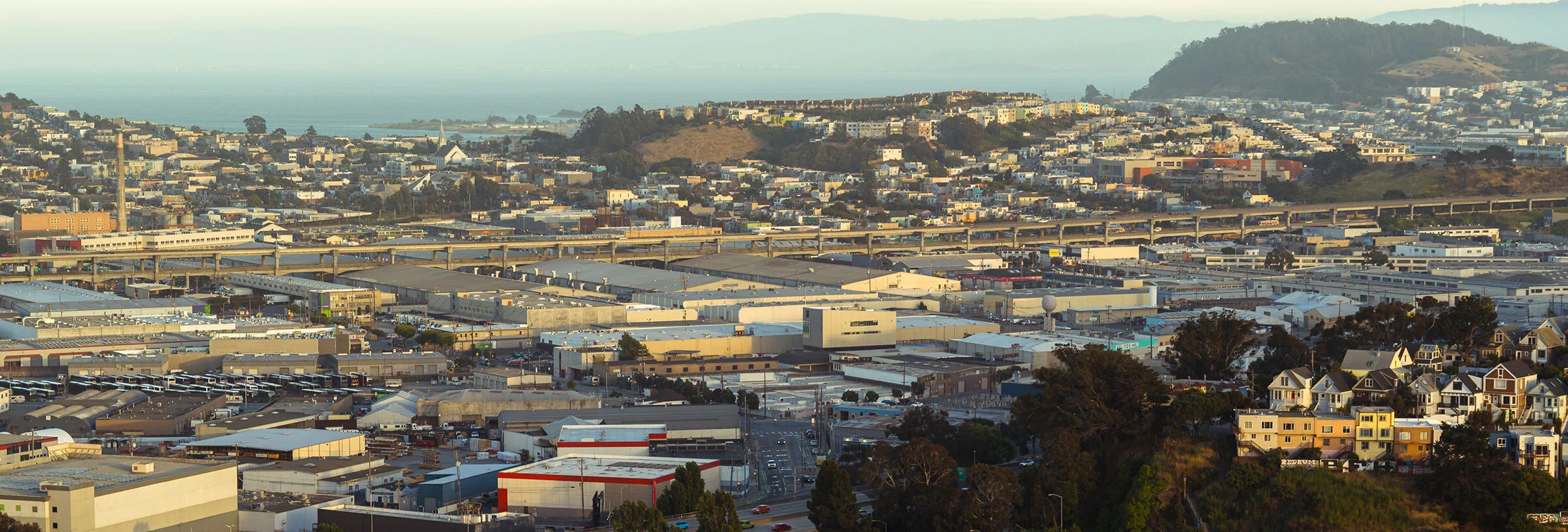
Helping Secure Innovative Financing for the Potrero Yard Modernization Project
San Francisco Municipal Transportation Agency (SFMTA)’s Potrero Yard, built in 1915, is no longer capable of supporting a modern and growing transit system. SFMTA has been expanding service and plans to operate hundreds more vehicles and intends to transition to a zero-emission battery electric bus fleet by 2035. The current two-story structure needed additional space to accommodate the growing fleet and retrofit for new systems and electric charging. Furthermore, the obsolete structure didn’t meet seismic and maintenance standards necessary for safe and efficient working conditions for the staff.
The Potrero Yard Modernization Project will replace the yard and facility with a modern, four-story, efficient bus maintenance and storage facility. The modernization will address critical transportation issues and improve efficiency, allowing SFTMA to repair buses faster and increase fleet reliability; bolster sustainability by providing a green infrastructure; allow for future growth—there will be room for 68% more buses at the updated facility; and improve work conditions by enhancing environments, amenities and safety conditions for 800+ SFMTA staff.
We assisted SFMTA in tailoring solutions and securing financing for the Project amidst numerous affordability and implementation challenges and considerations, resulting in the successful financial close on April 17, 2026, following a 2022 procurement and a 3.5 year predevelopment phase. The Project has an estimated construction cost of approximately $620 million and will be developed under a Design, Build, Finance (DBF) structure, employing an innovative 501c3 financing approach with tax-exempt bonds issued by the California Municipal Finance Authority. The bonds are supported through an appropriations only credit without any revenue pledge. Construction is expected to start in early 2027 and the new facility is expected to open in 2030.
The successful completion of the Project would extend beyond the bus yard itself. The increase in available well-maintained buses will provide a more reliable transit for riders and an all-electric fleet will reduce air and noise pollution, improving quality of life and long-term public health for nearby residents.

