Reshaping Seattle’s Waterfront with a Two-Mile-Long Tunnel
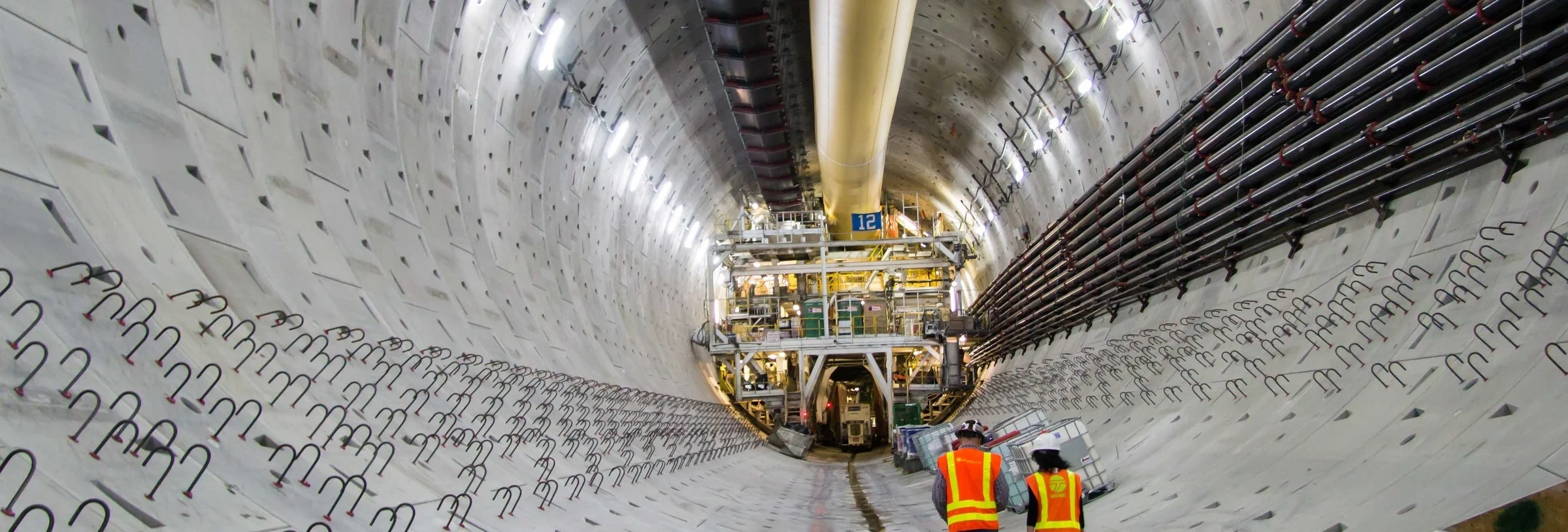
The Alaskan Way Viaduct, a double-decked freeway that ran along Seattle, Washington’s waterfront, was damaged in the 2001 Nisqually earthquake. The Washington State Department of Transportation (WSDOT) stabilized the structure, but it remained vulnerable to collapse in the event of another major earthquake. With our assistance, the agency has now replaced the viaduct with SR-99, a 2-mile underground tunnel.
“Together, we are building a city of the future,” said Seattle Mayor Jenny A. Durkan. “With the new SR 99 tunnel, we can finally bring down the viaduct and reconnect Seattle with its heart – the Puget Sound.”
PROJECT DETAILS
WSDOT awarded the $1.35 billion design-build contract to a Dragados/Tutor Perini joint venture in 2010. To build the tunnel, “Big Bertha,” a custom-built tunneling machine, created the world’s largest-diameter (57 feet) bored tunnel. Replacing the viaduct with a tunnel instead of a surface highway minimized traffic disruption during construction and moved traffic belowground once the tunnel opened. The tunnel opened to traffic in February 2019, with tolling starting in November.
The decision to use a tunnel to replace the viaduct meant that the surface could be used for further development of the waterfront. Some of the development projects included in the initiative include installing protected bike lanes, the rebuilding of Pier 62, and the development of new ways to highlight small businesses, farmers, and artists.

